Building a flow-led fashion brand into a premium headless Shopify ecommerce experience
Client: Aavek
Industry: Sustainable / contemporary fashion
Services: Branding, brand guidelines, visual identity, ecommerce UI/UX, Shopify headless development
Website: aavek.com
The Context
Aavek Already Had a Real Point of View
Aavek was not a blank project. The founders already had a strong product direction. They were building clothes around comfort, movement, natural fabrics, and everyday elegance. The products were soft, relaxed, and considered.
But the brand around them had to catch up.
That is usually where fashion brands get stuck. They have good products, good taste, and a strong founder story. But online, all of that becomes invisible if the website does not make the brand easy to understand and easy to buy from.
Most fashion websites make one of two mistakes. Some become too minimal and lose all personality. Others become too decorative and make the product feel secondary. Aavek needed neither.
It needed a brand and website that felt like the clothes themselves: calm, warm, Indian, modern, easy to wear, and easy to shop.
The Challenge
Good Products Do Not Automatically Become Good Ecommerce
Aavek had strong raw material as a brand. It had a clear product philosophy, a serious manufacturing background, and the kind of story most fashion brands try to invent later.
But credibility alone does not sell online.
Customers do not touch the fabric. They do not see how a garment falls. They do not meet the founder. They do not hear the story unless the brand makes that story obvious.
That was the real problem. Aavek had good raw material as a brand. It needed shape.
Why Fashion Ecommerce Is Hard
The Website Has to Replace the Store ExperienceFor a fashion brand, the website is not just a catalogue. It is the fitting room, the salesperson, the first store, the trust layer, and the brand experience.
It has to do all of this while loading fast enough that the customer does not leave.
This matters more for fashion than people think because fashion buying is full of small doubts. Will this fit me? Will the fabric feel good? Will it look like the photos? Can I wear this often? Is the brand worth the price? Can I exchange it? How long will delivery take?
If the website does not answer these questions, the customer delays the purchase. If the website is slow, the customer may not even reach the product page.
So the work was not just to make Aavek look premium. The work was to make Aavek feel clear.
The Brand Strategy
The Core Idea: Flow, Mocha Mousse, and Indian Culture
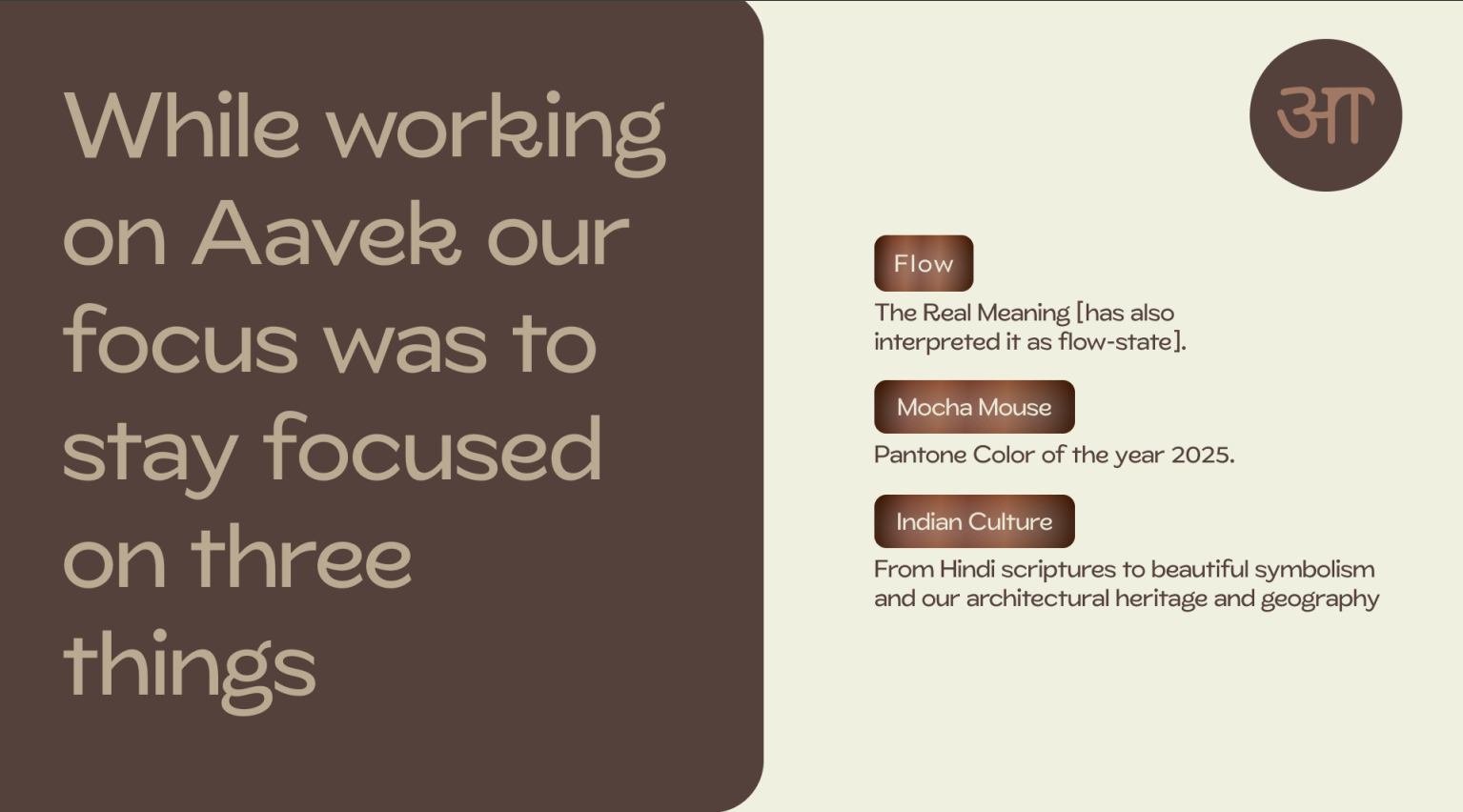
We built the identity around three ideas: flow, Mocha Mousse, and Indian culture.Flow mattered because the clothes were not meant to feel stiff. They were meant to move with the person wearing them.
Mocha Mousse mattered because the brand needed warmth. Not the cold black and white minimalism that every fashion brand uses now, but something softer and more tactile.
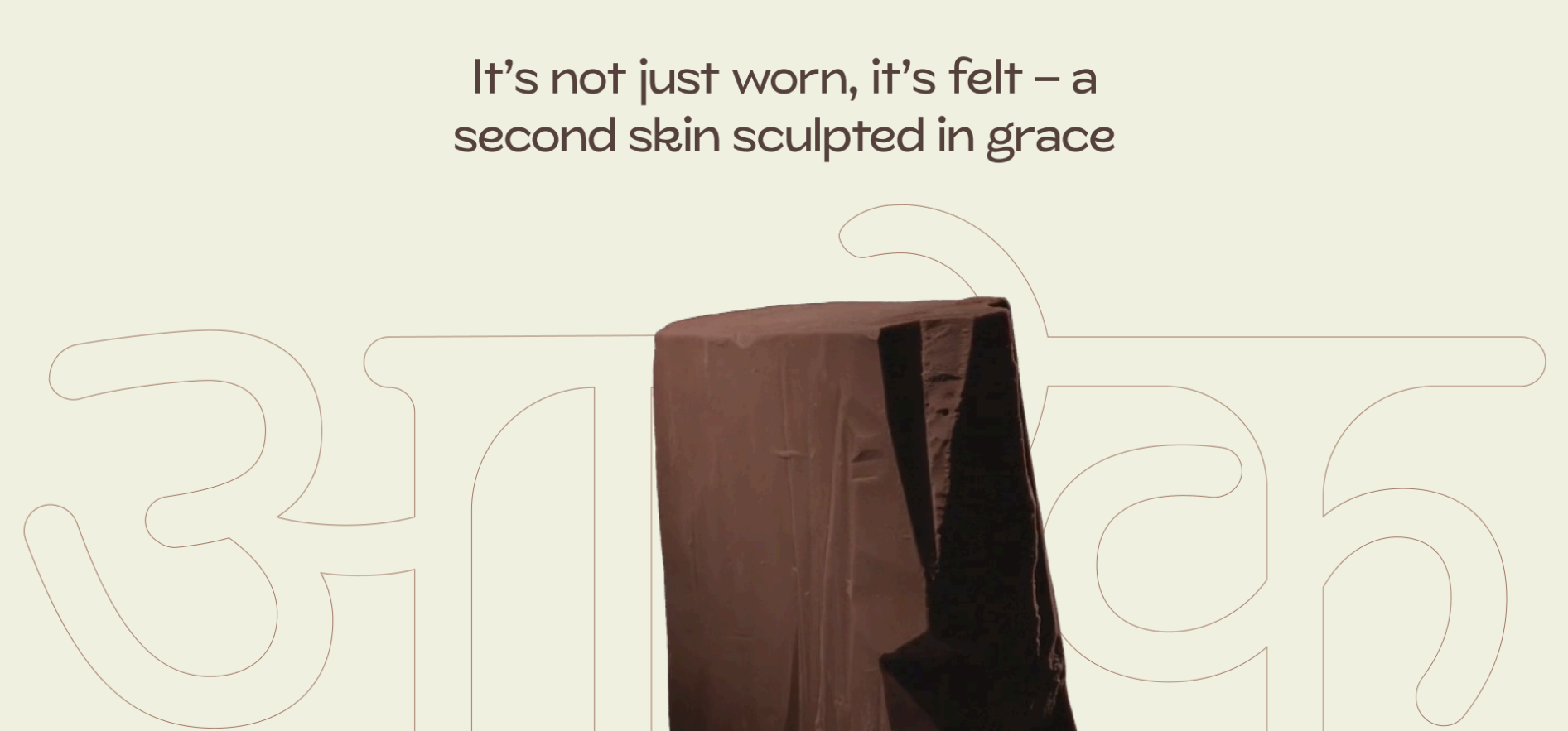
Indian culture mattered because Aavek was not trying to look like another global beige label. Its identity had to feel rooted without becoming obvious or costume-like. The brand line captured the direction well: it is not just worn, it is felt. A second skin sculpted in grace.
That became the centre of the system.
The Identity System

A Devanagari-Led Wordmark Built for Recall
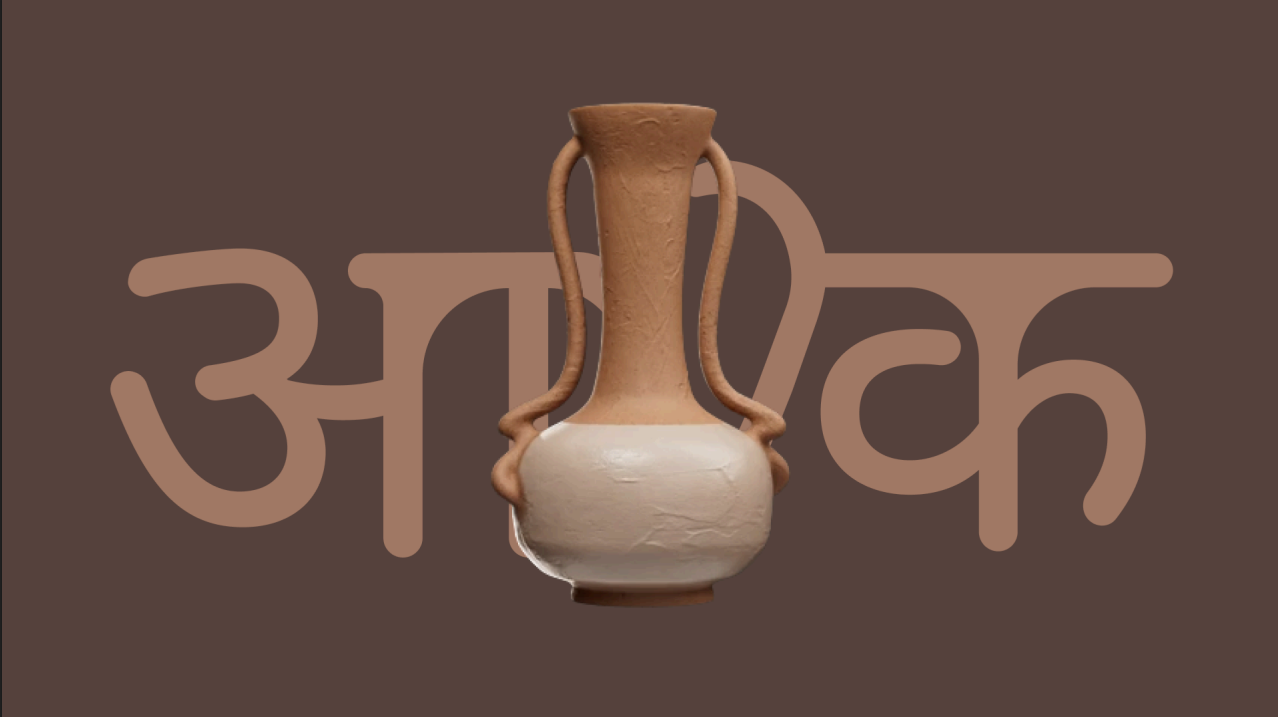
We created a custom Devanagari-led wordmark for Aavek. This was important.A Latin wordmark would have made the brand feel cleaner, maybe even more premium in the usual way. But it would also make it easier to forget.
The Devanagari identity gave Aavek a stronger memory hook. It made the brand feel Indian without using the usual shortcuts of motifs, borders, craft clichés, or overly ethnic styling.
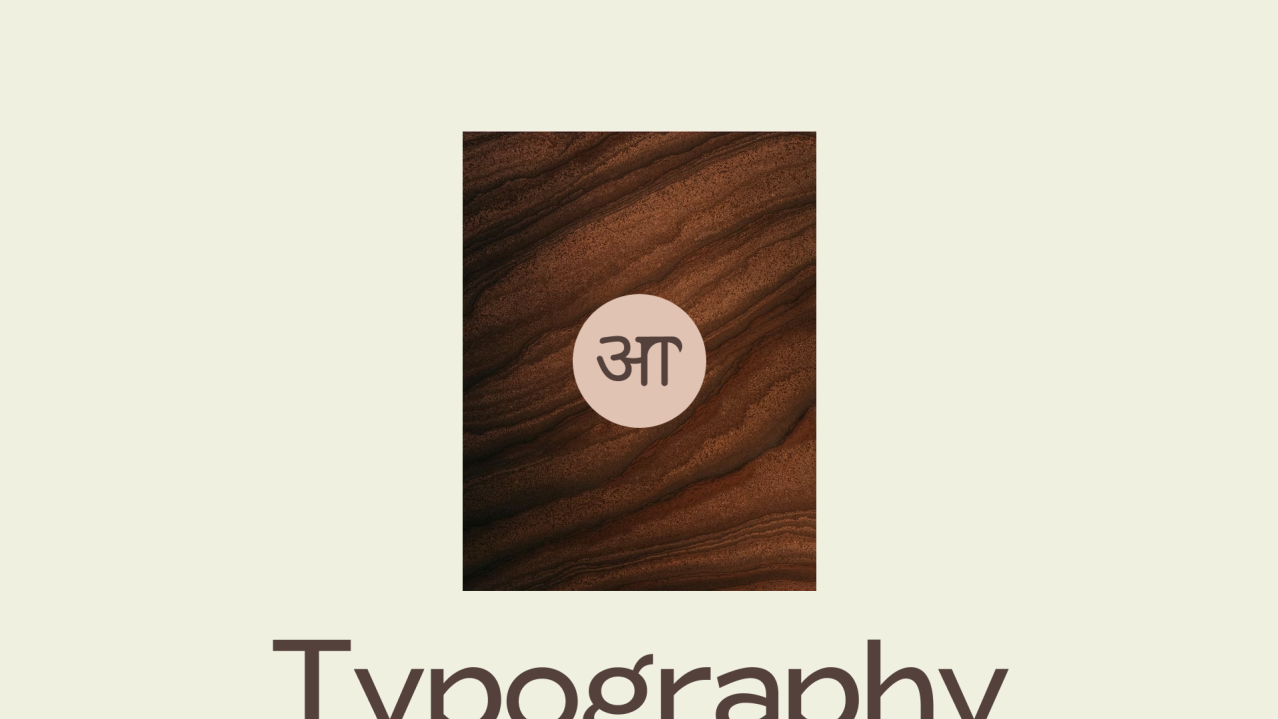
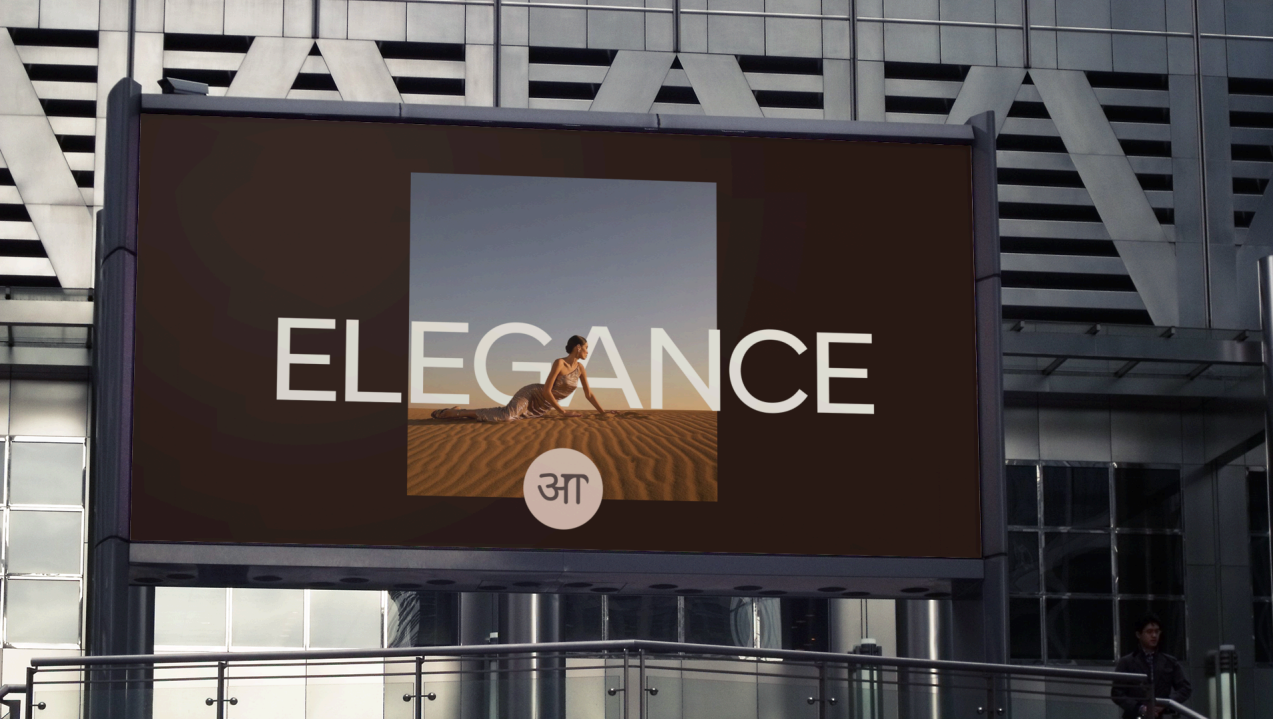
Along with the full wordmark, we created a compact “आ” icon. The icon gave the brand flexibility. It could work as a favicon, social mark, label detail, packaging element, or subtle brand stamp across digital and print surfaces.
The system also defined spacing rules, background usage, logo pairings, and what not to do with the logo.
That part matters more than people think. A logo is not a logo until it survives real usage.
The Colour System
Warmth Instead of Generic Minimalism
The main colour was Mocha Mousse.That choice did a lot of work. It made the brand feel warm, soft, grounded, and slightly indulgent. It also matched the world Aavek was building: natural textures, breathable fabrics, relaxed silhouettes, and quiet luxury.
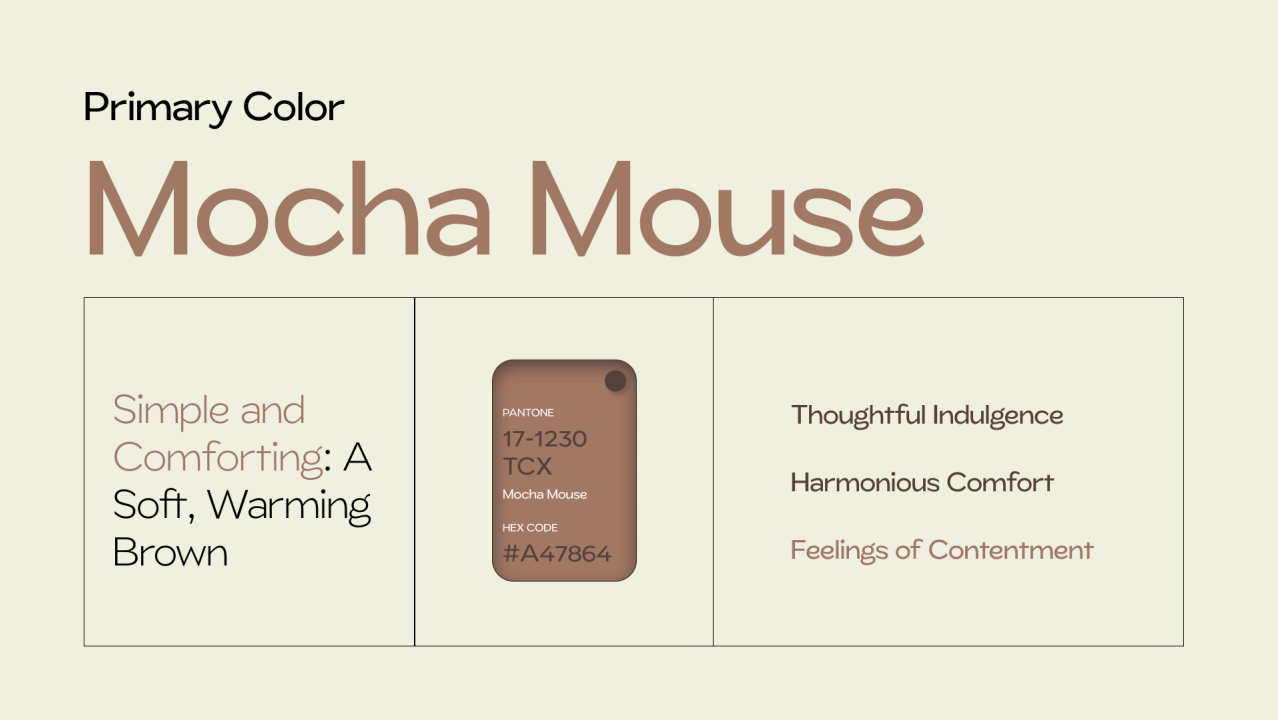
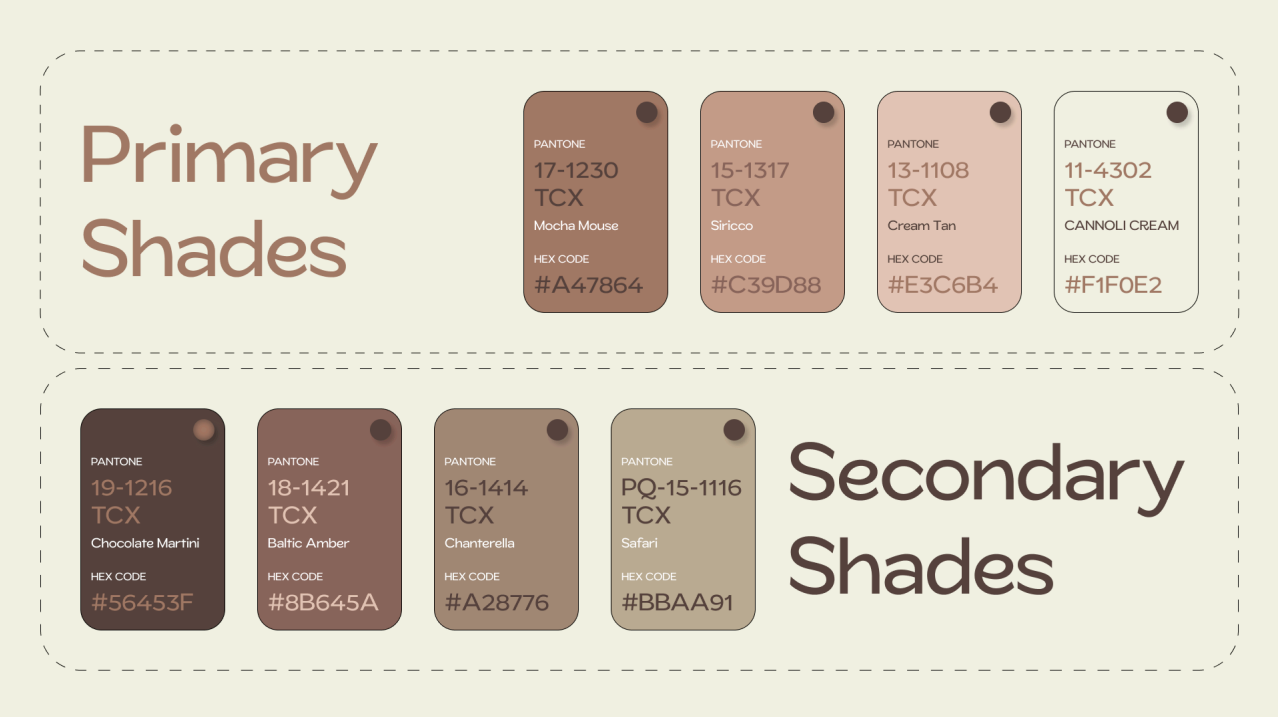
The supporting colours included Chocolate Martini, Cream Tan, Cannoli Cream, Baric Amber, Chinchilla, Safari, and other warm neutral shades.
This helped Aavek avoid the most common problem in sustainable fashion branding. A lot of brands in this space end up looking the same: beige background, serif font, leaf language, soft product photos, and no real distinction.
Aavek’s palette gave the brand softness, but also weight.
The Typography System
Editorial, Soft, and Human
The typography system used ZT Glora Pro as the primary typeface and Kunika as the secondary typeface. This gave the brand two different energies. ZT Glora Pro brought structure and fashion editorial confidence. Kunika brought softness and a more human quality.
That combination helped the brand avoid feeling either too corporate or too ornamental. For a fashion brand like Aavek, this balance matters. The brand needs to feel elevated, but it should not feel distant.
The Visual Direction
Relaxed Elegance Without the Usual Clichés
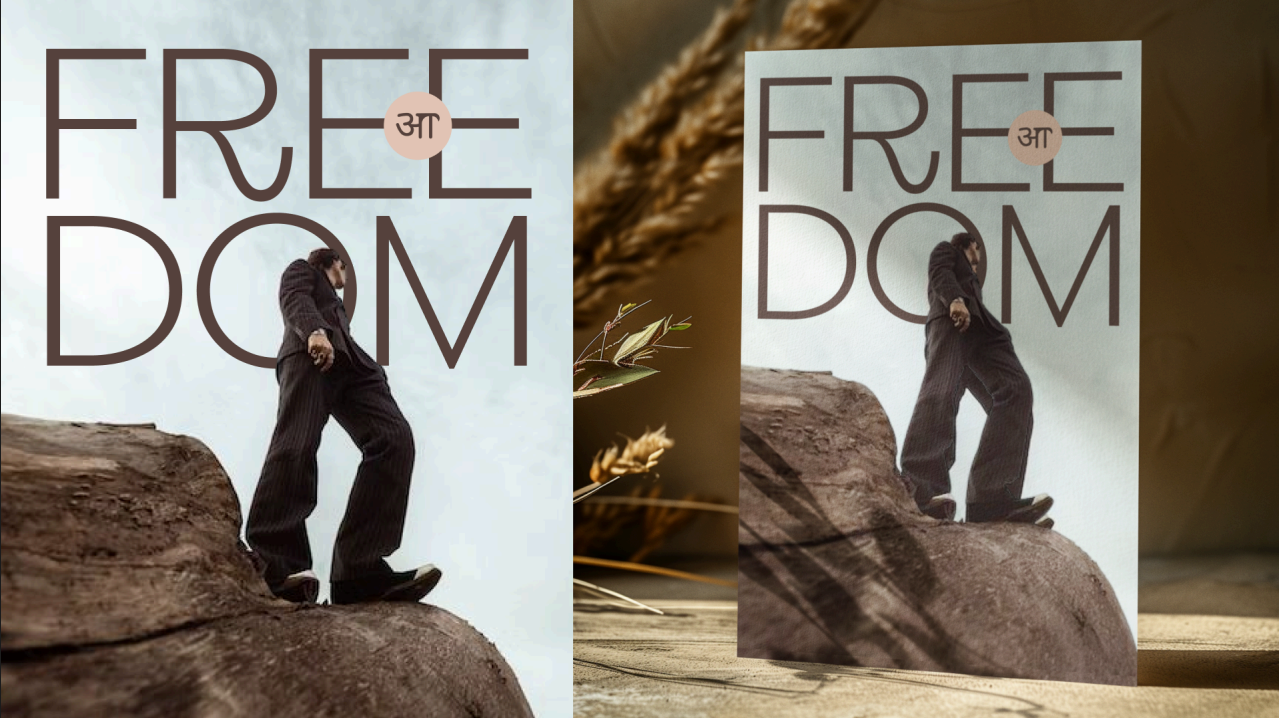
The visual world was built around relaxed elegance. Not luxury that shouts. Not sustainability that lectures. Not Indian design reduced to predictable symbols.
The visual system used warm browns, soft creams, sculptural forms, organic textures, natural surfaces, and movement-led imagery. The goal was to make Aavek feel like a world, not just a logo placed on clothes.
This matters because fashion brands are not bought only through logic. They are bought through association. A customer is asking a quiet question: do I see myself in this world?
The brand system had to help the answer become yes.
The Website Strategy
Shoppable Without Flattening the Brand
The website had one job: make the brand shoppable without flattening it.That sounds simple, but it is hard. Most ecommerce websites either become too commercial or too aesthetic. If they become too commercial, they lose brand value. If they become too aesthetic, they lose conversion.
Aavek needed both.
It needed enough storytelling to feel premium, enough structure to help customers shop, and enough speed to make the experience feel effortless.
The Collection Architecture
Built Around How People Actually Browse
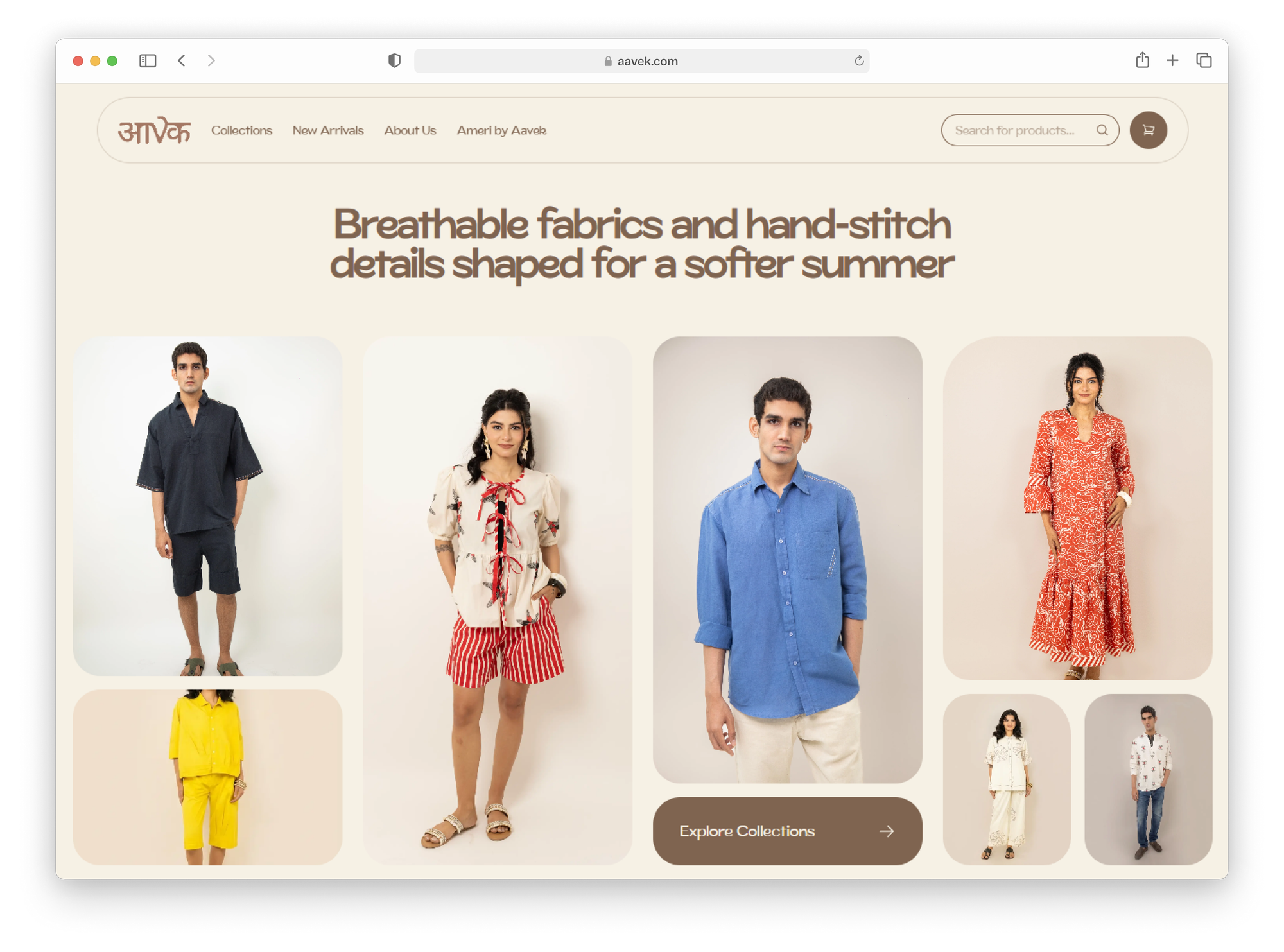
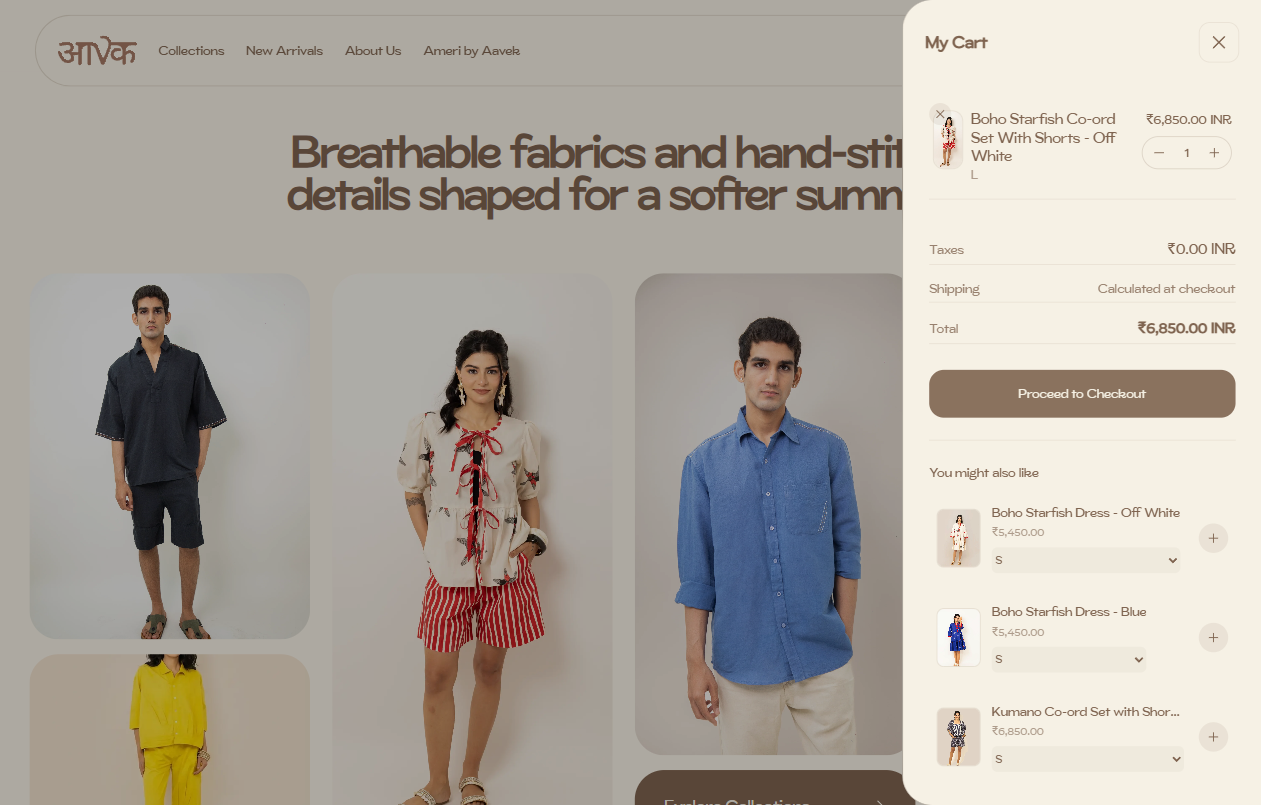
The collections were organised by how people actually browse: Aavek for Her, Aavek for Him, Co-ord Sets, Dresses, New Arrivals, Pants, Shirts, Shorts, Tops, and Ameri by Aavek.
This structure matters because ecommerce navigation is not decoration. It is conversion infrastructure.
When people land on a fashion site, they do not always know what they want. Some browse by gender, some browse by product type, some browse by newness, and some browse by sub-brand or collection mood.
The site had to support all of these behaviours without feeling crowded.
The Product Page System
Designed to Reduce Doubt
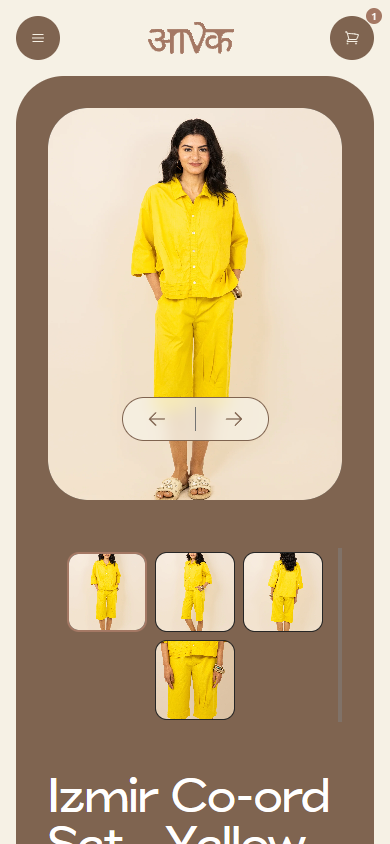
Fashion product pages carry a lot of weight. The customer cannot touch the fabric, try the size, or see the garment in motion unless the page helps them imagine it.
So the product pages were built to reduce doubt.
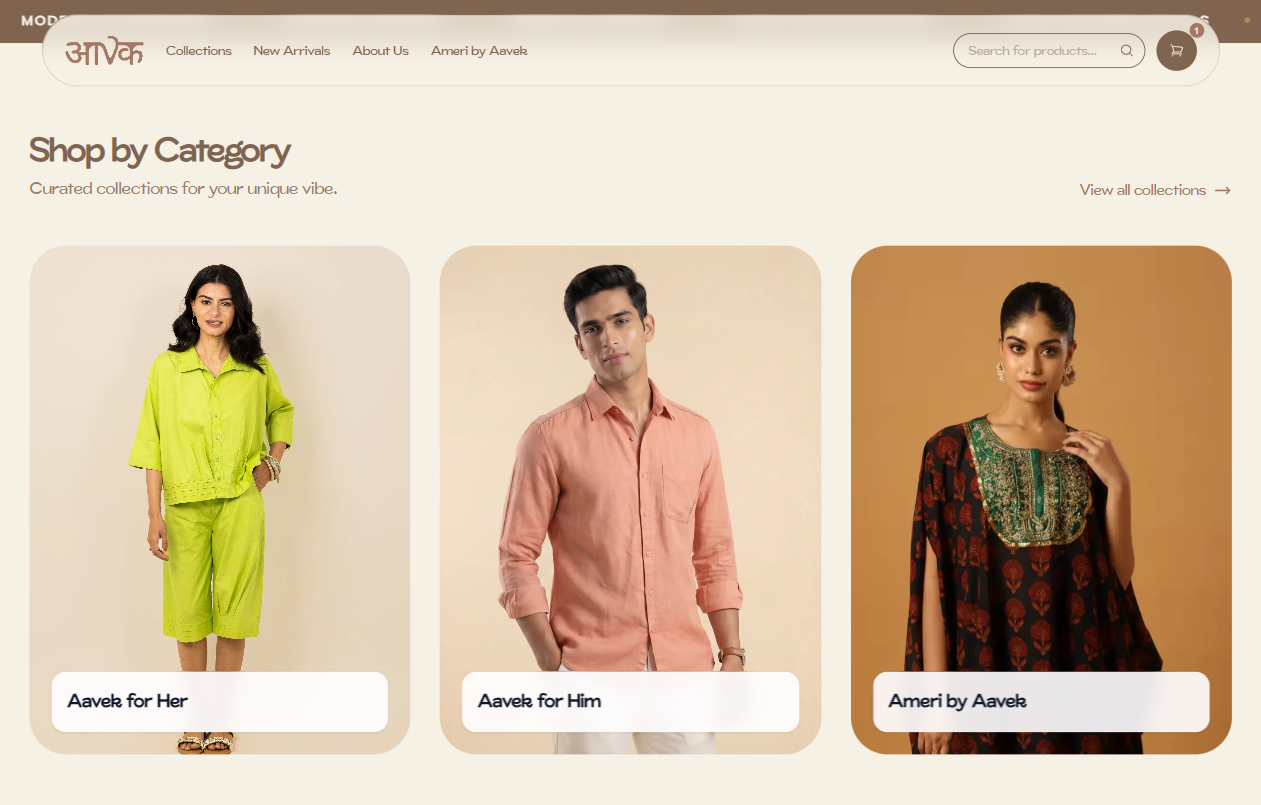
They include product images, fabric information, size charts, fit notes, custom sizing, model notes, related products, and a clear add to cart flow.
That may sound basic, but basic is what most fashion websites get wrong.
If a customer has to guess the fit, fabric, timeline, return policy, or styling, they delay the purchase.
A good product page does not just show the product. It removes fear.
The Trust Layer
Clear Expectations for Handmade Fashion
Aavek’s products are handmade and made to order. That is a strength, but it also creates operational questions.
How long will the order take? Is shipping free? Can I return it? Can I exchange sizes? What happens if I change my mind?
These questions matter because slow fashion does not work like fast fashion. The customer needs clarity before checkout.
So the website included a clear shipping and returns layer: handmade production, 1 to 2 week shipping, free shipping, no refunds, size exchanges, and store credit.
This kind of clarity protects both sides. It helps the customer buy with confidence and helps the brand avoid confusion later.
The Headless Shopify Build
Shopify for Commerce, Custom Frontend for Brand Experience
We built Aavek on a headless Shopify setup.
This gave the brand the reliability of Shopify for commerce and the flexibility of a custom frontend for the brand experience. That was the right approach for this project because Aavek did not need a generic theme. It needed a site where the identity, collection structure, product storytelling, and shopping flow could feel more controlled.
A premium fashion brand cannot look like it was assembled from a template, especially not at launch. Shopify handled the commerce foundation. The headless frontend handled the brand experience. That combination gave Aavek more room to feel distinct.
Why Speed Matters for Conversion
Performance Is a Sales Problem
A beautiful ecommerce site still fails if it is slow.
This is where many brands get confused. They think performance is a developer problem. It is not. Performance is a sales problem.
When a page is slow, fewer people reach the product. When fewer people reach the product, fewer people add to cart. When fewer people add to cart, acquisition gets more expensive.
That means speed affects conversion, ad efficiency, SEO, and brand perception at the same time.
Industry research backs this up. Google recommends that Largest Contentful Paint should happen within 2.5 seconds for a good user experience. Deloitte’s research showed that even a 0.1 second improvement in mobile site speed can improve progression across the purchase funnel. Portent’s ecommerce research also found that pages loading around 1 second tend to convert much better than slower pages.
For ecommerce, speed is not just about patience. It is about trust.
A slow premium website feels unfinished. A fast premium website feels more expensive.
The Desktop Performance Audit
A Fast Desktop Experience for a Premium Storefront
After the live site was tested on desktop, the result was strong.
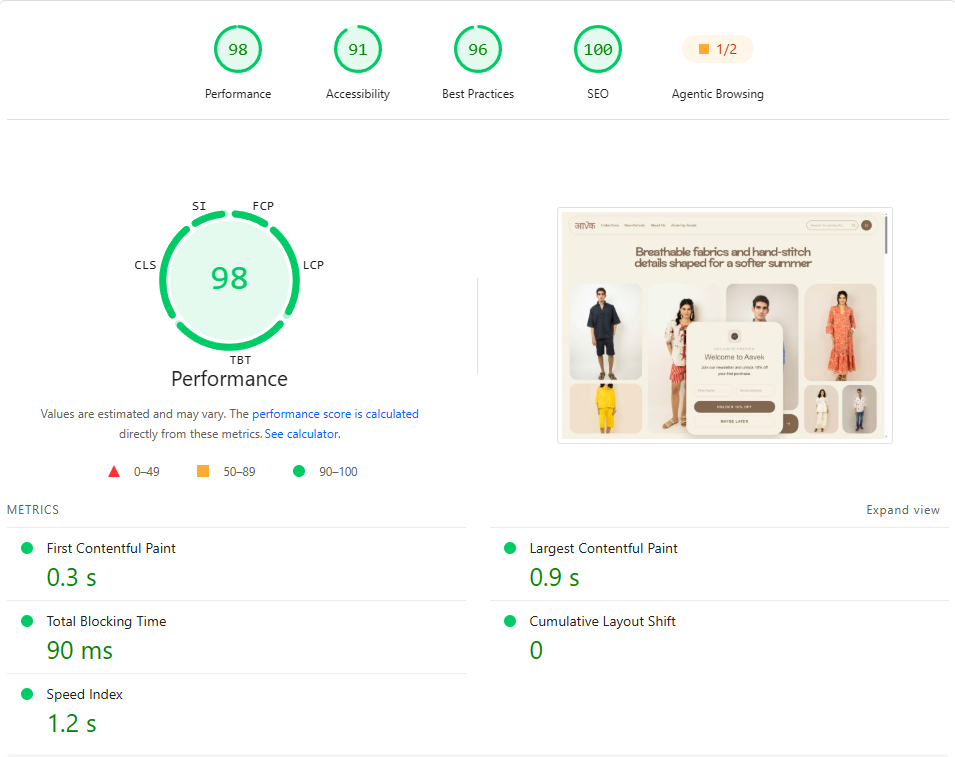
The desktop Lighthouse score was 98 for Performance, 91 for Accessibility, 96 for Best Practices, and 100 for SEO.
The key loading metrics were also clean. First Contentful Paint was 0.3 seconds, Largest Contentful Paint was 0.9 seconds, Speed Index was 1.2 seconds, Cumulative Layout Shift was 0, and Total Blocking Time was 90 ms.
This matters because ecommerce performance is not just a technical metric. It changes how the brand feels.
For Aavek, the desktop experience showed that the brand system and commerce experience were not fighting the technical build. The site could carry large visuals, product discovery, and brand storytelling while still loading quickly on desktop.
That is the kind of foundation a premium fashion brand needs before it starts scaling traffic.
The SEO Foundation
Search-Friendly Without Keyword Stuffing
The site also had a 100 SEO score in the desktop audit. A Lighthouse SEO score is not the same as ranking. It does not mean a brand will automatically show up for every keyword. But it does show that the basics are in place. That matters because most ecommerce SEO breaks when the basics are messy. Pages are not crawlable. Titles are weak. Collections are unclear. Product pages lack structure. Internal linking is poor. The site is too slow. The brand does not have enough content depth.
For Aavek, the foundation was stronger because the ecommerce structure and brand structure were aligned.
The collections created clear category paths. The product pages carried fit and fabric information. The homepage communicated material quality and brand positioning. The About page gave the brand a deeper story around sustainability, slow fashion, and manufacturing legacy.
This is how ecommerce SEO should work. Not by stuffing keywords, but by making the website easier for both people and search engines to understand.
Brand and Conversion Are Not Separate
The System Has to Work Together
Aavek is a good example of something we believe strongly at Saday.
Branding and conversion are not separate jobs.
The brand decides why someone should care. The website decides how easy it is to act on that interest. Speed decides whether they stay long enough to act. SEO decides whether more of the right people can discover the brand later.
If any one of these is weak, the system leaks.
A beautiful brand with a weak website does not convert. A fast website with no brand does not build desire. A good product page with poor trust signals creates hesitation. A strong SEO setup without a strong brand brings traffic that does not remember you.
The goal is not to make one part impressive. The goal is to make all parts point in the same direction.
What We Delivered
A Brand and Commerce Foundation
Before the project, Aavek had a product idea and a fashion direction. After the project, it had a brand system.
That is the difference.
A product idea can sell a few pieces. A brand system can keep scaling.
The final system gave Aavek a custom Devanagari wordmark, a compact “आ” brand icon, a warm colour palette led by Mocha Mousse, a typography system with editorial and human balance, a visual direction rooted in flow, texture, and relaxed elegance, a headless Shopify ecommerce website, a clear collection structure, product pages built for customer confidence, a trust layer for handmade and made-to-order shopping, a strong desktop performance score, and a clean SEO foundation.
The Result
A Premium Fashion Brand Built for Clarity, Trust, and Speed
Aavek now feels like a real fashion brand.
Not because it has a logo, but because the identity, colors, typography, imagery, product structure, and website all point in the same direction.
The brand feels calm. The site feels premium. The product pages feel clear. The Indian influence is present without being loud.
The desktop performance also validates the build. With a 98 Performance score, 100 SEO score, 0.9 second LCP, 0 CLS, and 1.2 second Speed Index, the experience is not just visually polished. It is fast where it matters.
That is usually where good ecommerce work lands.
First you make the brand coherent. Then you make the store shoppable. Then you make the experience fast enough to feel effortless.
Aavek now has the foundation for all three.
The Bigger Lesson
Modern Ecommerce Is One Connected Experience
Aavek shows why modern ecommerce cannot be treated as separate departments.
Branding is not just identity. Development is not just code. SEO is not just metadata. Performance is not just a Lighthouse score.
For a customer, it is all one experience.
They see an ad, click a link, land on the website, browse a collection, open a product, read the fabric details, check the size chart, look for shipping information, and decide whether the brand feels worth trusting.
Every step either adds confidence or removes it.
That is why we built Aavek as a system: a brand system, a commerce system, a trust system, and a speed-conscious system.
Not just a website.